Showing posts with label Sowerby. Show all posts

Monday, April 18, 2022

Sowerby St Peter's graveyard

Registers for baptisms and burials at St Peter's begin in 1643. There are five burials recorded in 1643, then a break until 1648.

James Hyleley of Hyley was amongst these first burials. James has already been mentioned in this Blog:
25 March 2020 - early references to the property High Lee in Sowerby
11 September 2021 - his father Michael's baptism and the family tree
19 November 2021 - described as the richest man in Sowerby

St Peter's Sowerby burial records
(with the permission of West Yorkshire Archive Service)
www.wyjs.org.uk/archives

Also buried at St Peter's were James's son James (buried 1680) and his son's wife Mary (nee Nailor, buried 1662). There were other relations of James buried here as well, including a number of infants.

There are no remaining gravestones bearing an inscription for any of these burials. 

                                                                    The church and graveyard today:


View from Towngate near the church looking across the Calder valley.
Sowerby Lane leading to High Lee is in the top left

Thursday, April 7, 2022

Calderdale graveyards

This Blog has already featured posts on some of the churchyards in Calderdale where Hileys or Highleys are buried. At the last count, there were 23 which have graves with monumental inscriptions showing burials of Hileys or Highleys.

There are also a number of Calderdale churches where Hileys or Highleys were buried but which no longer have visible gravestones to commemorate them. This may be because the families never provided gravestones in the first place (maybe because they could not afford them), or because the stones became unsafe or damaged and had to be removed, or because burial plots may have been re-used after centuries have elapsed.

In the next few posts we will look at some of these churchyards:

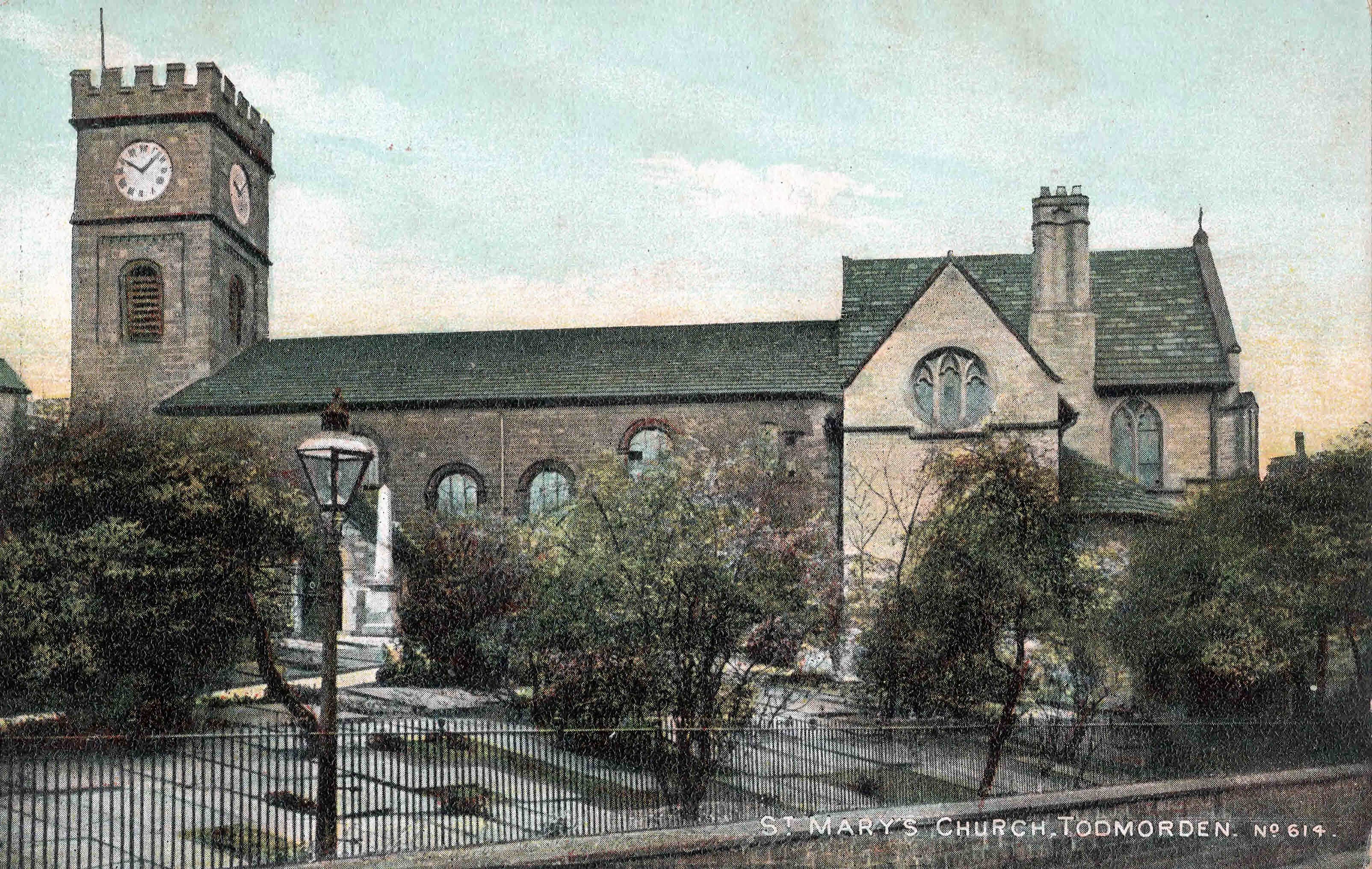
 1 Todmorden St Mary's


2 Sowerby St Peter's


                                                                              3 Halifax St John the Baptist

4 Heptonstall St Thomas the Apostle


Saturday, September 11, 2021

On this day...Baptism of Michaell Hileley

Michaell Hileley son of William Hileley of Sowerby was baptised on this day 11 September 1554.

The entry in the Parish Registers of Halifax 1538-1593 is: 
Michaell fili Willi Hilyley de Sourby xi Septebr 1554

Michael's forename and surname are spelt in many different ways in the various records where he is mentioned. For example:
Forename: Mychaell, Mychael, Michaell, Michael
Surname: Hilyley, Hileley, Hyleylighe, Hilleley, Highley, Hyleyly
In this post I have used the modern day spelling Michael for the forename and Hileley for the surname.

Michael's father William married Isabell Opkenson in Halifax on 2nd October 1552. They had one son Michael in 1554. Isabell died in 1557 and William then married Elena Norcleff in 1564. He died in 1579.

William left a will. In it he requested that after his debts were paid, the rest should be divided equally into two parts. His wife Elena was to receive one part which was to be made up to £40 if less than that sum. The rest was to go to Michael. Elena and Michael were made executors.

Michael married Isabell Hileley on 16 September 1577. It is not clear whether Isabell was a widow who had previously been married to a Hileley, or whether she was a spinster. She may have been the daughter of James Hileley. In James's will of 1577 (see post of 14 March 2019) he leaves the residue of his estate to his daughters Margaret and Isabell. James married Alice Tatsall in 1542 and they had children George in 1544 and Elizabeth in 1546 so Isabell and Margaret may have been the younger unmarried daughters born around 1550.

Marriage of Michael and Isabell
Michaell Hyleylighe and Isabell Hyleylighe were married on the 16th day of September 1577

(with the permission of West Yorkshire Archive Service)

www.wyjs.org.uk/archives

In 1579 Michael served as the Sowerby Constable. The post of 6 November 2019 describes the role of the Constable and lists the Hileys who served in this position. It is likely that Michael was a man of some standing in the Sowerby community.

Michael and Isabell had three children - Susan (b 1578), James (b 1582) and Grace (b 1585). The family tree below shows Michael and his descendants. Some assumptions have been made in constructing this tree because there are not enough surviving records to confirm all the relationships. In time it may be possible to extend this tree and connect it to other Hiley trees from the 16th and 17th centuries and later ones.
 

Michael died in 1589 and left a will. He describes himself as 'Michaell Hilleley of the Hilleley in the township of Sowerby'. He made provision for his wife and three children and made Edmond Hilleley responsible for implementing his wishes. Edmond was probably his cousin.

Michael's son James became a rich man. In 'Yorkshire Diaries & Autobiographies in the 17th and 18th centuries - Some memoirs concerning the family of the Priestleys' Jonathan Priestley writes that 'Highlee of Highlee, in Sowerby.........was the richest man in Sowerby, when Sowerby chapel was built, having sixty houses and farms'.


Thursday, April 2, 2020

Plagues in the Halifax parish

With the country struggling to deal with the Coronavirus pandemic, this post has a topical flavour and looks at some of the plagues and diseases which have affected West Yorkshire over the centuries. Almost certainly Hiley families living here would have been affected.

The ‘Black Death’ or ‘Great Pestilence’ probably originated in Asia and had arrived in England by June 1348. It is estimated to have killed about a third of the world’s population and up to 50% in Yorkshire.

From 1360-62 a second outbreak occurred. This became known as the ‘Children’s Plague’ as children under 10 were the hardest hit.

Another epidemic of plague hit Yorkshire in 1374 and the effects of this, together with the Black Death, Children’s Plague and other local outbreaks of plague at the end of this century, meant that Yorkshire’s population took more then 200 years to recover to its pre-1348 level.

In 1551 the ‘Sweating Sickness’ swept over the Halifax parish. Between 2nd August and 24th August 42 out of 45 deaths recorded in the Halifax parish register were due to this disease.

In May 1631 there was an outbreak of plague in Halifax. It may have arrived in wool brought from an infected district. The disease first struck in Erringden and spread to Heptonstall where nearly 40 houses were affected and 107 people died between May and September, and also to Mixenden and Ovenden where 55 people died.

Outbreaks of plague continued to affect communities all over the country. In October 1645 there were many deaths from the plague in the parish of Halifax, probably due to the dirty, overcrowded and badly-drained conditions. During the early years of the English Civil War, 1642-45, regular movement of soldiers and goods from place to place enabled outbreaks to spread more readily. About 500 people died in Halifax out of a population of 6000 – around 8% of the population.

The Sowerby constable of the time records that precautions were taken to prevent the spread of the plague in the town. A chain was stretched across the road at Sowerby Bridge and two sentry houses were built to guard against the spread of infection. This kept Sowerby free of the disease. This was just a few years before Henry Hileley served his term as Constable (see blogpost of 7th November 2019).

The Great Plague struck the country in 1665. Probably because of its scattered rural communities Halifax district did not suffer quite so badly during this time as did the rest of Britain.

Sources:
Plague in West Yorkshire. Kirklees Cousins – West Yorkshire Family History
Malcolm Bull’s Calderdale Companion
The Story of Old Halifax by T W Hanson
Parish registers of Halifax. Marriages and Burials 1538-1593. Transcribed and edited by E W Crossley

Wednesday, March 25, 2020

Early references to High Lee

The Blogpost of 10th February 2019 discussed the origin of the Hiley surname.

The first reference to High Lee as an actual location in Sowerby was in the will of Michaell Hilleley who died in 1588. His will begins:
In the name of god Amen the thirtieth day of January Ann Dm 1588. I Michaell Hilleley of the Hilleley in the township of Sowerby and diocese of York sick in body but of good and perfect remembrance...…………….

Five years later, John Hileley of Tyrvin made his will and bequeathed:
…..all the household stuff within the house and parlour to Elizabeth Hileleye the wife of Gilbert Hileley of the Hileley.

The West Yorkshire Archives contain a number of records describing various land transactions in Sowerby. Mentioned in some of these are:
Edmond Hylyley of Hileley in Sowerby, yeoman (1596)
James Hylilee of Hylilee (1608)
James Hileley of Hiley in Sorby, co. York, clothier (1624)

In the Publications of the Surtees Society, Yorkshire Diaries & Autobiographies include 'some memoirs concerning the family of the Priestleys', written by Jonathan Priestley in 1696. He refers to:
….one Highlee of Highlee in Sowerby.....; this man was the richest man in Sowerby.....having sixty houses and farms....
This was James Highlee who died in 1643.

In 1664 James Hileley of Hathershelfe, son of the James mentioned above, transferred his farm of Hileleigh in Sowerby to his eldest son Henry, but made provision that if he should outlive his son he might freely use a cooking room and a room above the cellar, together with a rent charge of £12 a year.

This transaction is recorded in the Wakefield Court Rolls 1664-5 (Yorkshire Archaeological Society).

James Hileley transfers his farm to his son Henry

It seems that there were no Hileys occupying the High Lee property after the end of the 1600s.

Monday, February 10, 2020

High Lee today

Below are some recent photos of High Lee and the surrounding area. Part of the property is now a Care Home and part private residences.

High Lee taken from Sowerby Lane

Looking from Hathershelf across to High Lee Green. In the distance on the left is the Warley hillside across the Calder valley


From above Luddendenfoot on the Warley hillside 
looking west across the Calder valley

From behind the cricket field of Luddendenfoot C.C.

The buildings at High Lee

Thursday, November 7, 2019

Henry Hileley, Sowerby Constable

A number of articles have been written giving summaries of sections of the Sowerby Constables' Accounts over the years.

The only mention of a Hiley Constable is that of Henry :

Henry Hileley, Constable, 1677-8, busied himself with the repair of the roads. The travellers he had to relieve were of no moment.
To James Bankcroft , when he went to get stones for stocks...……………………..0  1  6
For repayre of stocks ………………………………………………………………………..…....0  6  0
To Jno: Willman for leading 2 stones for stocks ………………………………………..0  0  9
                                                                        
In 1645-6 the Constables were Richard Houlgate and John Hopkinson. There are two entries in the Accounts which mention Edm. (Edmund) Hileley.

Paid to Edm. Hileley, James Sladen and Peter Mawde for makeinge a Watchehouse att Sowerby Bridge, the 13th of Novem. ……………………………………………………………………………………………........0  0
Paid to Edm. Hileley for theakinge the watchhouse att Sowerby Bridge, 
the 6th day of Dec. (1645) ………………………………………………………………………. 0  1  0
Paid for a load of coles which the watch had …………………………………………….0  0  6

(From Sowerby Constables' Accounts Parts II and IV. Lectures by Mr H P Kendall)

A theaking-rake was a small rake used by thatchers.

W B Crump wrote an article in 1928 for the Halifax Antiquarian Society on Sowerby Highways. He provided examples of work carried out in the summer of 1689 including the following:

29th July: Pd. to Henry Hiley for a man and horse 3 daies and leading stones with a sled to Sowerby Townegate.

He wrote: Certainly too much praise cannot be given to the Constables of Sowerby for their systematic repair of the highways. Year by year from 1629 to 1691 they kept men employed on the work


Sowerby Towngate with the Church (centre) and the Hall (left)
(with the permission of David Greaves)


Wednesday, November 6, 2019

Sowerby Constables

The Yorkshire Hileys came from the township of Sowerby in the ancient parish of Halifax. The map below shows Sowerby and all the other townships.

Map of the Parish of Halifax, showing the townships, church and chapels
(Sowerby Probate Records, Hebden Bridge Local History Society)

Each township had a Constable, serving for one year.

Peter Crabtree, in his book ‘Crabtree – Dweller by the Wild Apple Tree’ writes that:
The constable was responsible for the maintenance of law and order, for apprehending those suspected of crimes, and for bringing them before the manor or assize court for trial. The position, which was unpaid, was filled on a rotation basis and confirmed by the manor court. Fulfilling the office of township constable was one of the obligations of service of both bond and free tenant.' 

There are four Hileys listed in the records of the Constables for the township of Sowerby. The details below are taken from 'The Sowerby Constables', a lecture by Mr H P Kendall in 1906. A catalogue of the names of all the Constables is given by Mr Kendall, starting at the beginning of the reign of King Henry the Eighth in 1509. Years are given as the number of years since the start of a monarch's reign.

The table gives the name of the Hiley Constable, the name of the monarch at the time, the number of years since the start of that monarch's reign, and thus the year in which the Hiley Constable served.

Name                            In the reign of       Start of reign     Years since start of reign      Year

Gilbert Hyleley       Henry VIII             1509                    23                                             1532 
Michaell Hileley     Elizabeth I             1558                    21                                              1579 
Edward Hileley       Elizabeth I             1558                    29                                             1587 
Henry Hilley            Charles II               1660                    18                                             1678

The next Blogpost will give some brief details of Henry Hilley's year as Constable. 

Tuesday, May 28, 2019

The Hilileigh graves at Hartshead

At the end of the 1390s a branch of the Yorkshire Hileys moved from Sowerby to Clifton, a village about 10 miles east near Brighouse. The family became prominent in the village. A number of Hiley baptisms, marriages and burials are recorded in the parish records of St Peter's Church in Hartshead, a short distance away.

St Peter's Church in Hartshead

In the well-kept graveyard are three Hilileigh graves. These are likely to be descendants of the first family members to arrive from Sowerby.

The 3 Hilileigh graves at Hartshead

In the middle grave were buried (both in 1628) Jennet Hilileigh and her son Thomas. Jennet was the wife of John Hilileigh, buried in the right hand grave in 1614.

Grave of Jennet and Thomas Hilileigh


HERE LYETH THE BODIES
OF JENNET HILILEIGHE
WIFE OF JOHN HILILEIGH
WHICH WAS BURIED THE
28 OF APRILL 1628 AND
THOMAS HILILEIGH THEIR
SONNE WHO WAS BURIED
THE 24 OF FEBRUARY
ANNO DOMINI 1628


Buried in the left hand grave was Robert Hilileigh. Robert was a great grandson of John and Jennet and died aged 15 in 1683.
Grave of Robert Hilileigh


The wording on the gravestones of Robert and John is in Latin. Robert's inscription and a translation are given below.

SUB HOC TUMULO TE                                                            Beneath this mound is covered
GITER CORPUS ROBERTI                                                      The body of Robert
HILILEIGH FILII THOMAE                                                    Hilileigh son of Thomas
HILILEIGH DE CLIFTON QUI                                                Hilileigh of Clifton who
OBIIT SEPTIMO DIE                                                                 Died the 7th day 
JANUARII ANNO DOMINI 1683                                            Of January 1683
ANNO AETATIS 15                                                                     At the age of 15

Wednesday, March 27, 2019

Thomas del Helileghe

The first references to the Hiley name appear in the Court Rolls of the Manor of Wakefield.

These Rolls documented the business of the manor of Wakefield from 1274 to 1925. The manor was one of the largest in England and covered not just Wakefield, but a huge area of the West Riding including Halifax and Sowerby. The Court Rolls recorded the business of the court baron (held every three weeks at Wakefield) which dealt with enforcing manorial dues and transfers of land, and the court leet or tourn (held twice yearly at a number of locations including Halifax) which dealt with law and order and common agriculture. (Yorkshire Archaeological and Historical Society)

One of the first references concerns Thomas del Helileghe.


Court held at Halifax on the Tuesday next after the Feast of All Saints, 6 Edward III, 3 November 1332:

Sowerby:
Amerced (fined) 3d each for grazing a sow without right: Thomas le Priest, John del Rediker, Adam Culpon, Thomas del Helileghe, Adam de Coventre, Juliana de Blackwod, Roger de Bentileyrode, John de Longeley, Richard del Longebothem.


"Harvesting acorns to feed swine"
Queen Mary Psalter 1310-1320
Image in the Public Domain


Tuesday, March 19, 2019

Highley Hall

The earliest references to Hileys in Yorkshire were all from the township of Sowerby. At the end of the 1390s a branch of the family moved from Sowerby to Clifton, a village about 10 miles east near Brighouse.

There are several references to the Clifton Hileys in J Horsfall Turner's book 'The History of Brighouse, Rastrick and Hipperholme', first published in 1893. One of them describes an incident in 1391:

John Cockcroft of Wadsworth stabbed Adam s. William of Marsden, at Christmas, 1379. He was a fugitive till Candlemas, 1391, when Thos. s. Thos. de Hylelegh of Sowerby shot him with an arrow, which was valued at 1d. The said Thos. of Hilelegh, junr. shot with an arrow, at Hylelegh Place, John Hardery of Bingley shortly before, for which he was indicted.

From this time we find a branch of the Hileleghs at Hilelegh or Hiley Hall, Clifton.


Margaret Sharp includes a chapter on Highley Hall in her book 'Down the Acres'. She writes:

The Highleys became very important in the village and the Hall became known by their family name. Family members were listed in the court records as jurors and Constables from 1391 to 1587.

Highley Hall in Clifton


Initials over the front door may be those of Robert Hilileigh

More on the Clifton Hilileighs in a future blog.

Thursday, March 14, 2019

The Will of James Hilaleighe of Sowerby

This is the earliest Hiley will so far found, written on 27th June 1577. James died 3 weeks later and was buried on 21st July.

Will of James Hilaleighe of Sowerby 1577
(Click on the will to enlarge it)

Reproduced from an original in the Borthwick Institute, University of York, ref. Prob. Reg. 21 f.20.

The following translation was done by Michael Fitton:

In the name of God amen the 27 day of June in the year of our lord god 1577 I James Hilaleighe of the township of Sowerby and diocese of York Sick in body but of good and perfect remembrance praise be god Do make and ordain this my present testament containing herein my last will in manner and form following first and principally I commend my soul into the hands of almighty god my loving and merciful father assuredly believing to have remission of all my sins by the Death and passion of Jesus Christ his son my alone savior and redeemer and my body to be buried in the churchyard of Halifax among the bodies of the faithful there buried expecting with them to have a joyful resurrection. Item my will is that all debt and duties which I owe of right to any person or persons be well and truly contented and paid. Item I give and bequeath to Agnes the wife of Robert Ireland 40 shillings. Item I give and bequeath to William Gledhill of Warley all that which he owes to me and on and beside that 40 shillings. Item I give to five children of Margaret Ramsbotham deceased my sister to every one of them 10 shillings. Item I bequeath to Henry Perks 10 shillings to John Emmet 10 shillings and to Richard Dickson 10 shillings. Item I give and bequeath to Elizabeth Longbotham my daughter twenty marks to be paid within one year next after my decease upon condition that she the said Eliz and Edward Longbotham her husband do deliver one acquittance general under their seals to my executors hereafter to be named. The residue of all my goods chattels and debts after my funeral expense debt and payment are discharged I give and bequeath wholly to Margaret Hylaleighe and Isabell Hylaleighe my daughters equally to be divided between them and I appoint the said Margaret and Isabell Hylaleighe executrices of this my last will and testament. Witnesses hereof Adam Morris clerke, William Hilaleigh (next word looks like osk, perhaps means otherwise to denote a different spelling of surname) Hilaleighe George Hilaleighe Edmund Tatersall and Richard Denton.