Showing posts with label Halifax. Show all posts

Monday, February 23, 2026

Lister Lane Cemetery (3) - graves 2908 and 2721

Grave no. 2908

Norris Highley, son of Harry Highley and Annie (nee Stapp).
Elizabeth Sunderland (nee Robinson), wife of William Sunderland, great great grandmother of Harry.
George Nutton, son-in-law of Elizabeth, and his wife Hannah. 

Harry Highley was an Iron Moulder who lived in Halifax. 


Grave no. 2721

John Highley
Matilda Jane Brooksbank and Sam Brooksbank, stepchildren of John

John was the third husband of Caroline Helliwell. Her first husband, William Brooksbank, was the father of Matilda and Sam, and her second husband was Thomas Eastwood.

John was a Labourer, born in Warley but later lived in Halifax.


There are several Hileys/Highleys listed in the burial records but buried in unmarked graves or unable to be located, along with a number of adults and children in public or infant vaults with no markings.

Saturday, April 23, 2022

Halifax St John the Baptist graveyard

Continuing the series on Calderdale churchyards where Hileys/Highleys were buried but no monumental inscriptions remain ..........

Parish registers were formally introduced in England in 1538 following the split with the Roman Catholic Church, when Thomas Cromwell, minister to Henry VIII, issued an injunction requiring the registers of baptisms, marriages and burials to be kept.

The earliest available registers for West Yorkshire are the Parish registers of Halifax, 1538-1593. These cover baptisms, marriages and burials which took place in the Parish church of St John's, Halifax.


The earliest Hiley burial recorded in these registers was that of Margareta, daughter of Johane Hylyle of Sowerby on 27th April 1540.

The Blogpost of 14th March 2019 showed the will of James Hilaleighe of Sowerby, written in 1577. In common with all the other wills available from this time, he requested that he be buried at Halifax:

.............and my body to be buried in the churchyard of Halifax among the bodies of the faithful there buried expecting with them to have a joyful resurrection...........

All Hiley burials up to 1611 took place in Halifax and up until 1799 Halifax accounted for over one half of all Hiley burials which had taken place in Calderdale up to that time.

A record exists for the burial of Luke Highley:
In memory of Luke Highley of Halifax who departed this life on the 6th day of March 1814 aged 63. Also of Sarah, his wife, who died on 26th Dec 1814 aged 64 years
(Area K, opposite end from D of W chapel)

The plan below shows the lettered areas of the Parish Church tombstones as they were in 1934.


David Glover writes:

Many sections including section K were completely grassed over circa 1950. So, no chance the Luke Highley stone will be visible today. The only sections visible today are E, F, GG, small part of L, M, N, Q, R and S - basically footpaths and walking areas.

There are many ancient tombstones under the grass we have been asked about over the years; they are still there, but inaccessible. Yes - buried, like those beneath! Fortunately The Friends of Halifax Parish Church carried out a full inventory of the inscriptions in 1934, which is why we are lucky enough today to have the MIs (Monumental Inscriptions) in full.

Very few ledger stones survive from the early 17th Century. The earliest are dated around 1630, though of course there may be more grassed over. Even within the building, there are hardly any pre Civil War. We are not clear if it was rare to have stones in the 1600s, or whether some older ones were later removed, broken up, and replaced. Thousands were buried over many centuries in the churchyard, we can tell from the Burials Register, and on more than one occasion rooms under the church were used as a charnel house for bones.

Thursday, April 7, 2022

Calderdale graveyards

This Blog has already featured posts on some of the churchyards in Calderdale where Hileys or Highleys are buried. At the last count, there were 23 which have graves with monumental inscriptions showing burials of Hileys or Highleys.

There are also a number of Calderdale churches where Hileys or Highleys were buried but which no longer have visible gravestones to commemorate them. This may be because the families never provided gravestones in the first place (maybe because they could not afford them), or because the stones became unsafe or damaged and had to be removed, or because burial plots may have been re-used after centuries have elapsed.

In the next few posts we will look at some of these churchyards:

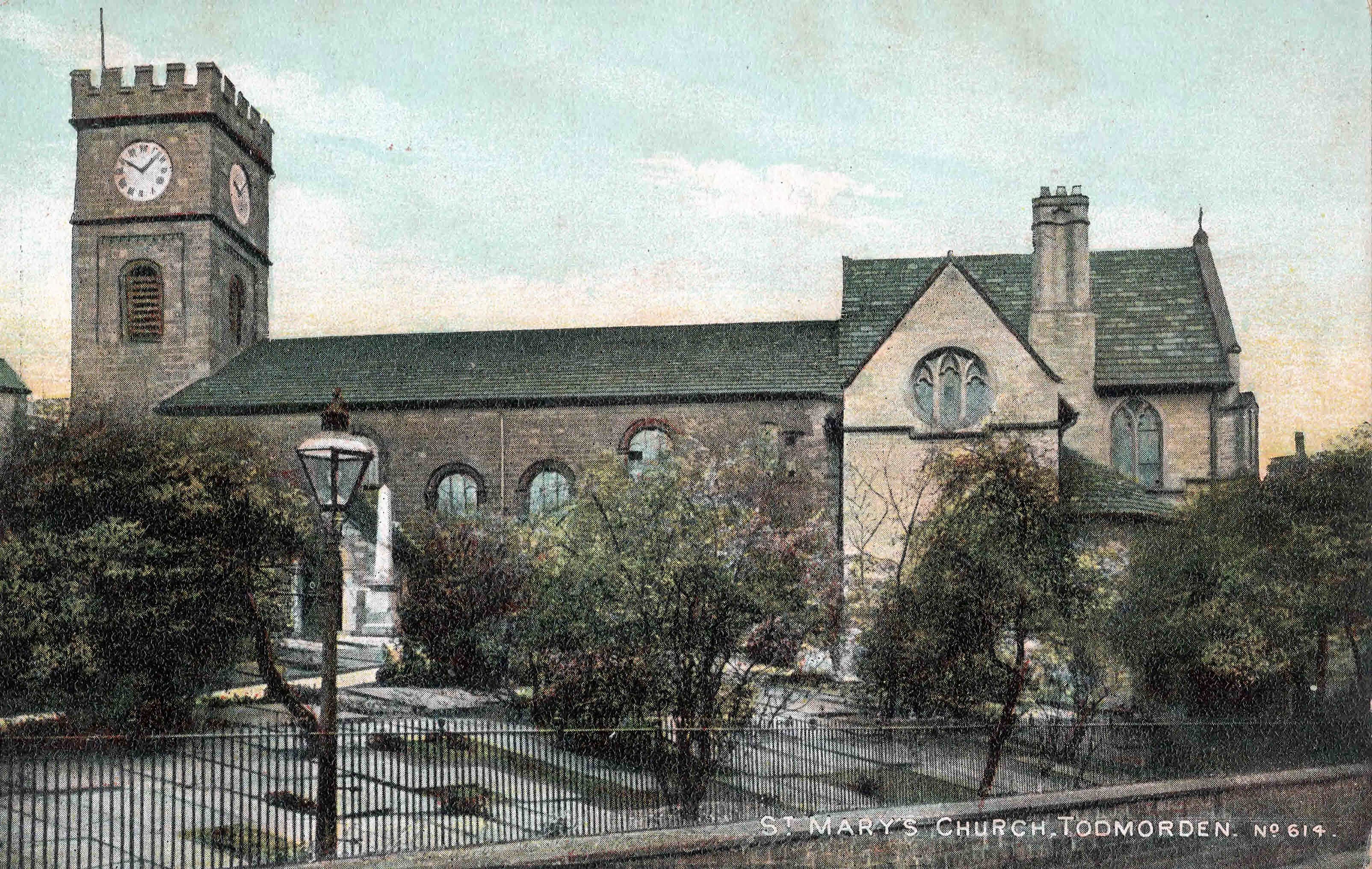
 1 Todmorden St Mary's


2 Sowerby St Peter's


                                                                              3 Halifax St John the Baptist

4 Heptonstall St Thomas the Apostle


Friday, November 19, 2021

Highlee of Highlee, the richest man in Sowerby

Instead of an 'On this day' feature this month we have an 'In this month' post.

In 1886 The Surtees Society published a work in its series of 'Yorkshire Diaries & Autobiographies in the Seventeenth and Eighteenth Centuries'. It was called 'Some Memoirs concerning the Family of the Priestleys, written, at the request of a friend, by Jonathan Priestley.' It was written in 1696 in the 63rd year of his life.

Jonathan was one of the seven sons of Joseph Priestley and his wife Elizabeth. The family lived at Goodgreave in Soyland, a village near Sowerby and five miles south west of Halifax. Priestleys had lived in Soyland for many generations. Joseph was a yeoman clothier combining cloth-making with farming. The family took some of their cloth to sell at the cloth exchange in London.

The Priestley family suffered at the time of the Civil War between 1642 and 1644. The yeoman farmers and weavers rebelled against King Charles's policies and took up arms against them. Joseph joined the Parliamentarian cause and fled into Lancashire in August 1643 along with his son Samuel when the Royalists occupied Halifax. The Priestley's home and lands at Goodgreave were ransacked and plundered.

Joseph was captured on Blackstone Edge and imprisoned in Halifax but became ill with a fever and died. In November 1643, after the Royalists had fled following the Battle of Heptonstall, Samuel found a Royalist soldier lying in the River Hebden. He waded into the water and rescued the man but died from pneumonia shortly afterwards.

In his memoirs Jonathan referred to his father's dealings with 'Highlee of Highlee'.  


The property Highlee has been mentioned in previous posts. Enter 'High Lee' in the 'Search This Blog' box to read them.

The person called Highlee was James, the son of Michael - see the post of 11 September 2021. His son was also called James - 'young Highlee' in the excerpt above.


Saturday, September 11, 2021

On this day...Baptism of Michaell Hileley

Michaell Hileley son of William Hileley of Sowerby was baptised on this day 11 September 1554.

The entry in the Parish Registers of Halifax 1538-1593 is: 
Michaell fili Willi Hilyley de Sourby xi Septebr 1554

Michael's forename and surname are spelt in many different ways in the various records where he is mentioned. For example:
Forename: Mychaell, Mychael, Michaell, Michael
Surname: Hilyley, Hileley, Hyleylighe, Hilleley, Highley, Hyleyly
In this post I have used the modern day spelling Michael for the forename and Hileley for the surname.

Michael's father William married Isabell Opkenson in Halifax on 2nd October 1552. They had one son Michael in 1554. Isabell died in 1557 and William then married Elena Norcleff in 1564. He died in 1579.

William left a will. In it he requested that after his debts were paid, the rest should be divided equally into two parts. His wife Elena was to receive one part which was to be made up to £40 if less than that sum. The rest was to go to Michael. Elena and Michael were made executors.

Michael married Isabell Hileley on 16 September 1577. It is not clear whether Isabell was a widow who had previously been married to a Hileley, or whether she was a spinster. She may have been the daughter of James Hileley. In James's will of 1577 (see post of 14 March 2019) he leaves the residue of his estate to his daughters Margaret and Isabell. James married Alice Tatsall in 1542 and they had children George in 1544 and Elizabeth in 1546 so Isabell and Margaret may have been the younger unmarried daughters born around 1550.

Marriage of Michael and Isabell
Michaell Hyleylighe and Isabell Hyleylighe were married on the 16th day of September 1577

(with the permission of West Yorkshire Archive Service)

www.wyjs.org.uk/archives

In 1579 Michael served as the Sowerby Constable. The post of 6 November 2019 describes the role of the Constable and lists the Hileys who served in this position. It is likely that Michael was a man of some standing in the Sowerby community.

Michael and Isabell had three children - Susan (b 1578), James (b 1582) and Grace (b 1585). The family tree below shows Michael and his descendants. Some assumptions have been made in constructing this tree because there are not enough surviving records to confirm all the relationships. In time it may be possible to extend this tree and connect it to other Hiley trees from the 16th and 17th centuries and later ones.
 

Michael died in 1589 and left a will. He describes himself as 'Michaell Hilleley of the Hilleley in the township of Sowerby'. He made provision for his wife and three children and made Edmond Hilleley responsible for implementing his wishes. Edmond was probably his cousin.

Michael's son James became a rich man. In 'Yorkshire Diaries & Autobiographies in the 17th and 18th centuries - Some memoirs concerning the family of the Priestleys' Jonathan Priestley writes that 'Highlee of Highlee, in Sowerby.........was the richest man in Sowerby, when Sowerby chapel was built, having sixty houses and farms'.


Tuesday, July 20, 2021

On this day...Death of Joseph Highley

Joseph Highley was killed in action on this day 20th July in 1918.

Joseph was born in Ovenden near Halifax in 1880. His father Joseph was a Stone Quarryman and in 1901 the Census showed him working as a Stone Quarry Dresser.

He joined the Duke of Wellington’s (West Riding Regiment) 2nd/4th Battalion. The Battalion was formed at Halifax and was involved in various actions on the Western Front. Joseph may have fought in the 2nd Battle of the Marne in July 1918, the last major German offensive on the Western Front during the First World War. He was killed in action on 20th July 1918, aged 38, and was buried at Marfaux British Cemetery near Reims in northern France.

Marfaux British Cemetery

Joseph Highley's gravestone in Marfaux British Cemetery
(Courtesy of Steve Rogers, The War Graves Photographic Project)


Wednesday, August 19, 2020

In the pink

There have been a lot of posts about soldiers who lost their lives in the First World War. A lot of websites (like the Commonwealth War Graves Commission site) give plenty of information about these men. But we don't always know as much about the men who survived.

Willie Hiley was born in 1874 in Sowerby Bridge near Halifax, one of the 10 children of John and Sarah Hiley. In the 1891 census he was described as a Worsted Tackler, and then a Worsted Spinning Overlooker in 1901 and 1911. In the 1939 register he was listed as a Retired Worsted Mill Manager. At this time he was living with his younger sister Elizabeth. It appears that Willie never married and he died in 1950.

Worsted is a high quality type of wool yarn. Although both are made from sheep's wool, worsted yarns or fabrics, as distinct from woollens, are considered stronger, finer, smoother, and harder than the latter. Worsted wool fabric is typically used in the making of tailored garments such as suits, as opposed to woollen wool, which is used for knitted items such as sweaters.

Willie served in the Duke of Wellington's (West Riding) regiment which had its regimental depot in Halifax.

The following article appeared in The Halifax Courier on 21st October 1916.


Permission has been given by The Halifax Courier to include this article.

Thursday, July 9, 2020

Croft Mills, Halifax

The following report appeared in The Illustrated London News on 30th April 1853.
(used with permission  - (c) Illustrated London News/Mary Evans Picture Library)


Croft Mill in Gaol Lane, Halifax was built in 1847 and owned by the card-makers Messrs. Leyland and Highley. The partnership was dissolved in 1858 and the business carried on by Henry Holt Highley as Henry Highley & Sons. Henry and his wife Frances (nee Sutcliffe) had 6 sons and 4 daughters. Of the sons, George Henry and Thomas Sutcliffe went into the family business.

Carding was a stage in the clothmaking process. Cotton fibres had to be untangled and straightened out. Carding involved getting all the fibres running in the same direction. This was a skilled process involving the use of a brush with spikes, originally done by hand and later by a carding machine. A carder was normally an experienced worker.

The postcard below dates from 1897.


The 1901 census recorded Albert Birkby as a self-employed leather merchant, the son of John Birkby, a card-setting machine tenter.

Thursday, April 2, 2020

Plagues in the Halifax parish

With the country struggling to deal with the Coronavirus pandemic, this post has a topical flavour and looks at some of the plagues and diseases which have affected West Yorkshire over the centuries. Almost certainly Hiley families living here would have been affected.

The ‘Black Death’ or ‘Great Pestilence’ probably originated in Asia and had arrived in England by June 1348. It is estimated to have killed about a third of the world’s population and up to 50% in Yorkshire.

From 1360-62 a second outbreak occurred. This became known as the ‘Children’s Plague’ as children under 10 were the hardest hit.

Another epidemic of plague hit Yorkshire in 1374 and the effects of this, together with the Black Death, Children’s Plague and other local outbreaks of plague at the end of this century, meant that Yorkshire’s population took more then 200 years to recover to its pre-1348 level.

In 1551 the ‘Sweating Sickness’ swept over the Halifax parish. Between 2nd August and 24th August 42 out of 45 deaths recorded in the Halifax parish register were due to this disease.

In May 1631 there was an outbreak of plague in Halifax. It may have arrived in wool brought from an infected district. The disease first struck in Erringden and spread to Heptonstall where nearly 40 houses were affected and 107 people died between May and September, and also to Mixenden and Ovenden where 55 people died.

Outbreaks of plague continued to affect communities all over the country. In October 1645 there were many deaths from the plague in the parish of Halifax, probably due to the dirty, overcrowded and badly-drained conditions. During the early years of the English Civil War, 1642-45, regular movement of soldiers and goods from place to place enabled outbreaks to spread more readily. About 500 people died in Halifax out of a population of 6000 – around 8% of the population.

The Sowerby constable of the time records that precautions were taken to prevent the spread of the plague in the town. A chain was stretched across the road at Sowerby Bridge and two sentry houses were built to guard against the spread of infection. This kept Sowerby free of the disease. This was just a few years before Henry Hileley served his term as Constable (see blogpost of 7th November 2019).

The Great Plague struck the country in 1665. Probably because of its scattered rural communities Halifax district did not suffer quite so badly during this time as did the rest of Britain.

Sources:
Plague in West Yorkshire. Kirklees Cousins – West Yorkshire Family History
Malcolm Bull’s Calderdale Companion
The Story of Old Halifax by T W Hanson
Parish registers of Halifax. Marriages and Burials 1538-1593. Transcribed and edited by E W Crossley

Thursday, December 12, 2019

Double dating

The last Blogpost (11th December 2019) mentioned the baptism of Agnes Hylyle on 24th February 1539/40.

Before 1752 the calendar year started on 25th March rather than on 1st January so the year used for dates between 1st January and 24th March was the same as for the preceding December.

Dates between 1st January and 24th March before 1752 are often recorded using a technique called 'double dating'. They are given as two years. So Agnes's baptism on 24th February took place in 1539 under the old style (Julian calendar) and 1540 under the new style (Gregorian calendar). 1539 was the year the baptism appears in the parish register and 1540 is the modern year equivalent. Hence 1539/40.

The Blogpost of 5th June 2019 showed the inventory of the goods and chattels of Henry Hyley of Warley. The date of the inventory is properly recorded as 23rd February 1732/3. The record of the entry for Henry's will in the Prerogative & Exchequer Courts of York Probate Index is shown below.
(1732/3 Martii (March), Hyley Henrici de Warley P (Parish) Hallifax).

Record of entry for Henry Hyley's will


Wednesday, December 11, 2019

Halifax Parish Church

Parish registers were formally introduced in England in 1538 following the split with the Roman Catholic Church, when Thomas Cromwell, minister to Henry VIII, issued an injunction requiring the registers of baptisms, marriages and burials to be kept.

The earliest available registers for West Yorkshire are the Parish registers of Halifax, 1538-1593. These cover baptisms, marriages and burials which took place in the Parish church of St John's, Halifax.

The ancient parish of Halifax was the largest parish in Yorkshire and one of the largest in England. The Blog of 6th November shows a map of the townships which were part of the Halifax parish.


Halifax Parish Church

During the years 1538-1593, there were 63 baptisms, 33 marriages and 48 burials recorded involving Hileys, but with a large number of different variant spellings of the surname. Most of these entries were given in Latin.

Nearly all the Hiley marriages up to the year 1800 took place in Halifax Parish Church, with just a small number elsewhere at Heptonstall, Elland, Luddenden and Todmorden.

The earliest Hiley record at Halifax is for the baptism of Agnes, daughter of George Hylyle of Sowerby on 24th of February 1539/40. The next Blogpost will explain this method of denoting the year.

The following excerpt is from the 1598 burial register. It shows Jane, daughter of Michael Hileley of Sowerby, buried on the 19th April, and the widow of Gilbert Hileley of Sowerby buried on the following day.
Part of April 1598 burial register for Halifax Parish Church
(Taken from Ancestry)

The Blogpost of 14th March 2019 showed the will of James Hilaleighe of Sowerby written in 1577. In common with all the other wills available from this time, he requested that he be buried at Halifax:

.............and my body to be buried in the churchyard of Halifax among the bodies of the faithful there buried expecting with them to have a joyful resurrection...........


Pews in the Parish Church 2017


Sunday, November 10, 2019

Thomas Hiley and his son Herbert

Remembrance Sunday. We remember a father and son who lost their lives in WW1.

Thomas Edward Hiley was born in Southowram, Halifax in 1857. He married Mary Ann Gibson in Hull in 1880 but Mary died the following year. The 1881 Census showed Thomas as working aboard the vessel ‘Liberator’. He remarried in 1887 to Annie Edwards and by 1901 the couple had 5 children, including Herbert. At this time they were living in Boston, Lincolnshire and Thomas was described as a Fisherman. Annie died in 1908 and in 1911 Herbert, described as a Dock Labourer (Fish) was living independently in Skirbeck Quarter, Boston with his three younger siblings. Living close by was the Tann family, including Mary Ann, Herbert’s future wife. Thomas may well have been away at sea at the time of this Census.

On 16th October 1915 Thomas was a Deck Hand aboard the Steam Trawler ‘Fijian’ (Boston). The vessel was reported missing on that day. Given the location and date, it is likely that she struck a mine. There were no survivors.

Thomas's name is inscribed at the Tower Hill Memorial in London. The Memorial commemorates the men of the Merchant Navy and Fishing Fleets who have no grave but the sea.

At age 57, Thomas was the oldest of all the Hileys/Highleys to be killed during WW1.


Thomas Edward Hiley - Tower Hill Memorial
Included courtesy of Brian Watson, Vessels lost in WW1
http://www.benjidog.co.uk/Tower%20Hill/WW1%20Farraline%20to%20Firth.html


Fishing trawler The Holland - lost without trace in WW1
This would have been a similar vessel to Fijian
(from Old Boston, Boston's trawler fleet in WW1)


Herbert, born in 1893, married Mary Ann Tann in the Spring of 1914 in Boston, Lincolnshire.

He was a Stoker for the Royal Naval Reserve aboard H.M.S. Cressy. On 22nd September 1914. H.M.S. Cressy, along with H.M.S. Hogue and H.M.S. Aboukir, were ambushed by a German U Boat while on patrol off the Dutch coast. All three ships were torpedoed and sunk with the Cressy losing 560 of her crew, including Herbert.

The War was not yet two months old and Herbert had been married for only a few months. His name is remembered on the Chatham Naval Memorial in Kent.


Stoker Herbert Hiley - Chatham Naval Memorial
Included with the permission of Brad Evans at Find A Grave
H.M.S.Cressy

Tuesday, April 16, 2019

James Joseph Highley

Grave of James Joseph Highley

This is the grave of James Joseph Highley at Berles New Military Cemetery near Arras in northern France.

James Highley was born in Halifax in the West Riding of Yorkshire. His parents James J and Ann (nee Burke and born in Ireland) had married in 1875. In 1901 James, aged 16, was a Driver for a Gas Works, his father a General Labourer, and living with them in Halifax were three other children and Ann’s mother.

James married Margaret Ann Dawson on 25th June 1904 at St Bernard’s Church in Halifax, and a son John William was born on 4th November 1908. In 1911 James's occupation was a Cart Driver and the family lived at 8 Carleston Road, Halifax.

James enlisted in August 1915. He served with the Duke of Wellington’s (West Riding Regiment), 1st/7th Battalion, and was killed in action on 19th January 1917, aged 32.


The village of Berles au Bois remained in British hands from the summer of 1915, when it was taken over from French troops, until the end of the War, but it suffered at times from severe shelling. There are 166 identified casualties buried at this cemetery.

The entrance to the cemetery

Berles New Military Cemetery

Photos by Alexander Hiley

Thursday, March 14, 2019

The Will of James Hilaleighe of Sowerby

This is the earliest Hiley will so far found, written on 27th June 1577. James died 3 weeks later and was buried on 21st July.

Will of James Hilaleighe of Sowerby 1577
(Click on the will to enlarge it)

Reproduced from an original in the Borthwick Institute, University of York, ref. Prob. Reg. 21 f.20.

The following translation was done by Michael Fitton:

In the name of God amen the 27 day of June in the year of our lord god 1577 I James Hilaleighe of the township of Sowerby and diocese of York Sick in body but of good and perfect remembrance praise be god Do make and ordain this my present testament containing herein my last will in manner and form following first and principally I commend my soul into the hands of almighty god my loving and merciful father assuredly believing to have remission of all my sins by the Death and passion of Jesus Christ his son my alone savior and redeemer and my body to be buried in the churchyard of Halifax among the bodies of the faithful there buried expecting with them to have a joyful resurrection. Item my will is that all debt and duties which I owe of right to any person or persons be well and truly contented and paid. Item I give and bequeath to Agnes the wife of Robert Ireland 40 shillings. Item I give and bequeath to William Gledhill of Warley all that which he owes to me and on and beside that 40 shillings. Item I give to five children of Margaret Ramsbotham deceased my sister to every one of them 10 shillings. Item I bequeath to Henry Perks 10 shillings to John Emmet 10 shillings and to Richard Dickson 10 shillings. Item I give and bequeath to Elizabeth Longbotham my daughter twenty marks to be paid within one year next after my decease upon condition that she the said Eliz and Edward Longbotham her husband do deliver one acquittance general under their seals to my executors hereafter to be named. The residue of all my goods chattels and debts after my funeral expense debt and payment are discharged I give and bequeath wholly to Margaret Hylaleighe and Isabell Hylaleighe my daughters equally to be divided between them and I appoint the said Margaret and Isabell Hylaleighe executrices of this my last will and testament. Witnesses hereof Adam Morris clerke, William Hilaleigh (next word looks like osk, perhaps means otherwise to denote a different spelling of surname) Hilaleighe George Hilaleighe Edmund Tatersall and Richard Denton.


Saturday, February 23, 2019

Horace Highley

The next one in our series on Hileys/Highleys who lost their lives in WW1.

Horace Highley, born in Halifax, was the son of Joseph and Charlotte Elizabeth and in 1911, aged 19, was living with his parents and older brother James Wallace at 18 Grove Street, Bolton Brow, Sowerby Bridge. He was a Machine Fitter. The following year he married Emily Webster and a daughter Elsie was born in 1913.

Horace first signed up in July 1908 and then joined the Duke of Wellington’s (West Riding Regiment) 1st/4th Battalion in Halifax after war broke out in 1914. The Battalion fought in actions on the Western Front in 1915 and Horace was wounded in the field on 19th December 1915 and died at no. 10 Casualty Clearing Station, close to the Front, 3 days later. He is buried at Lijssenthoek Military Cemetery in Belgium.

Horace Highley's gravestone in Belgium
(included courtesy of Steve Rogers, The War Graves Photographic Project)

A year later Emily married James Bradbury in Halifax. The couple lived at the Turk’s Head Inn in Sowerby Bridge.

Thursday, February 14, 2019

James Hiley the Boatman

Lady of the Lake and burnt-out Lord of the Isles on the right
(included with the permission of Ian Boyle, Simplon Postcards website)

In 1845 the wooden Lady of the Lake became the first steamboat built to sail on an English lake. She was operated by the Windermere Steam Yacht Company and sailed from Newby Bridge to Ambleside, a distance of eleven miles which she covered in about an hour and a quarter. Such was the success of Lady of the Lake in her first year, that a second steamer was ordered, the Lord of the Isles, which was launched in 1846. Unfortunately her career was short-lived; she was destroyed by fire in 1850 while moored at Bowness pier. The fire occurred in suspicious circumstances and James Hiley, fireboy of the Lord, and William Jackson, fireboy of the Lady, were accused of wilfully setting fire to her. The lads were locked up in Appleby Prison to await trial at the local Assize Court but the case was dismissed. The judge ruled that it was unlikely that the boys would have deliberately destroyed the vessel as by doing so they would have denied themselves work.
(Windermere Lake Cruises, Company History - with permission)

James had been born in Hornby in 1833. His father Matthew, the organist at the Parish Church in Bowness, was born in Halifax in 1780. Matthew's father, also Matthew, and baptised in Ovenden near Halifax in 1747, was the son of John Hiley. It has not been possible yet to connect this John with the early Hiley/Highley families from the Halifax area.

John Campbell, in his book ‘Village by the Water – a History of Bowness-on-Windermere’, says that the occupations of fishermen and boatmen remained the exclusive preserve of local men, and mentions James Hiley as one of the three Windermere boatmen listed in the 1851 Census. ‘The boats in which visitors liked to pass a relaxing time on the water were owned by the hotels ………….the three boatmen would row them around the islands or elsewhere’.

In the 1861 Census James, now described as a Musician, was recorded as living in Crosthwaite near Keswick and he married Frances Walker the following year. After that no record has been found for James.

James’s brother John was a Tailor who lived in Bowness. John’s son Alfred was a Naval Architect and Engineer who worked at Vickers in Barrow-in-Furness.

We have no records of any children for either James or John.